Data Science2024
Bank Transaction Fraud Analysis
Exploring banking transaction patterns to uncover potential fraudulent behavior using data analysis and clustering.
Overview
Performed exploratory data analysis on banking transaction data to understand customer transaction behavior and identify hidden patterns using unsupervised machine learning techniques.
Problem
Fraudulent financial transactions are often difficult to identify through manual inspection due to the large volume and complexity of transaction data.
Solution
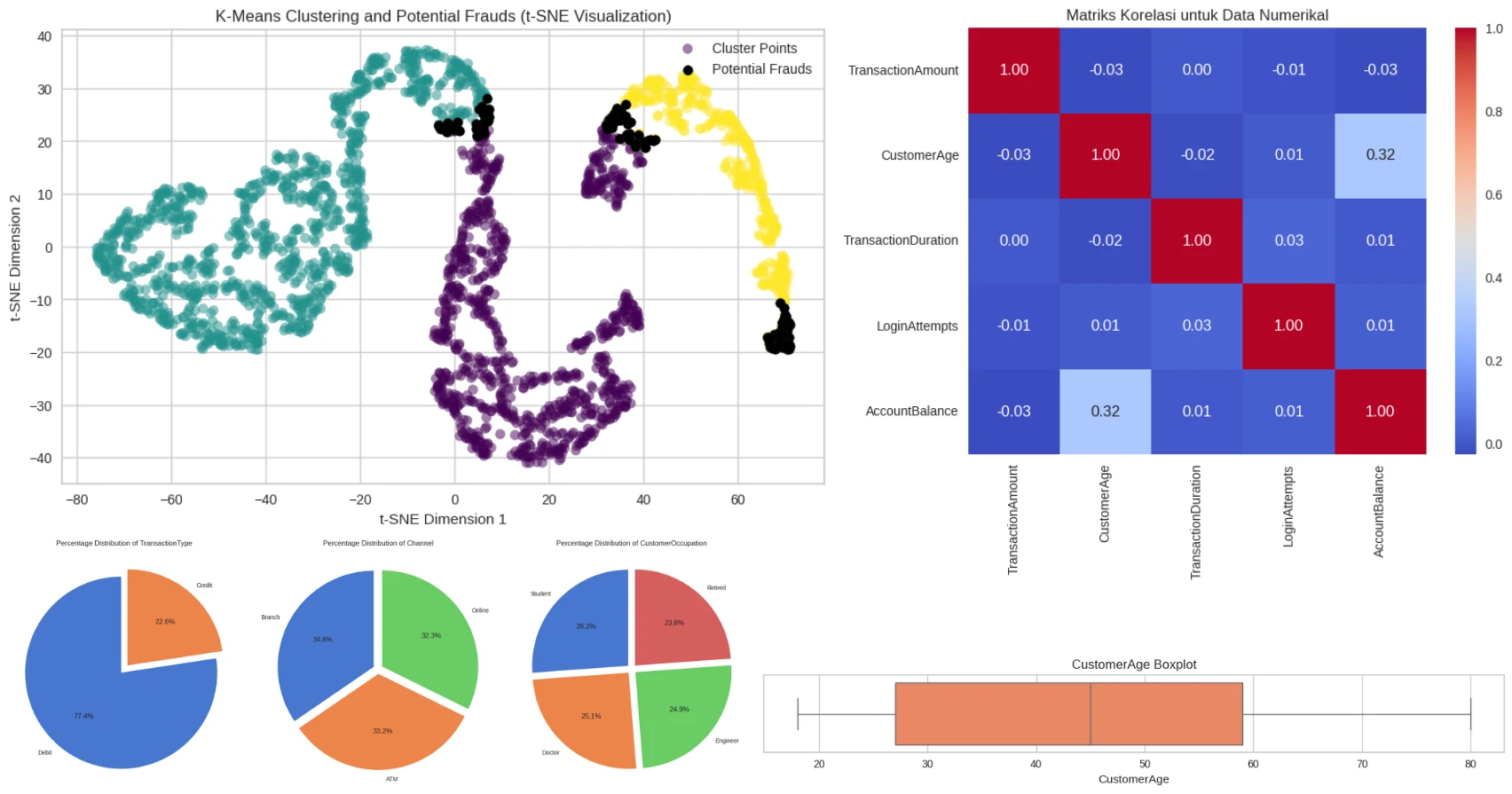
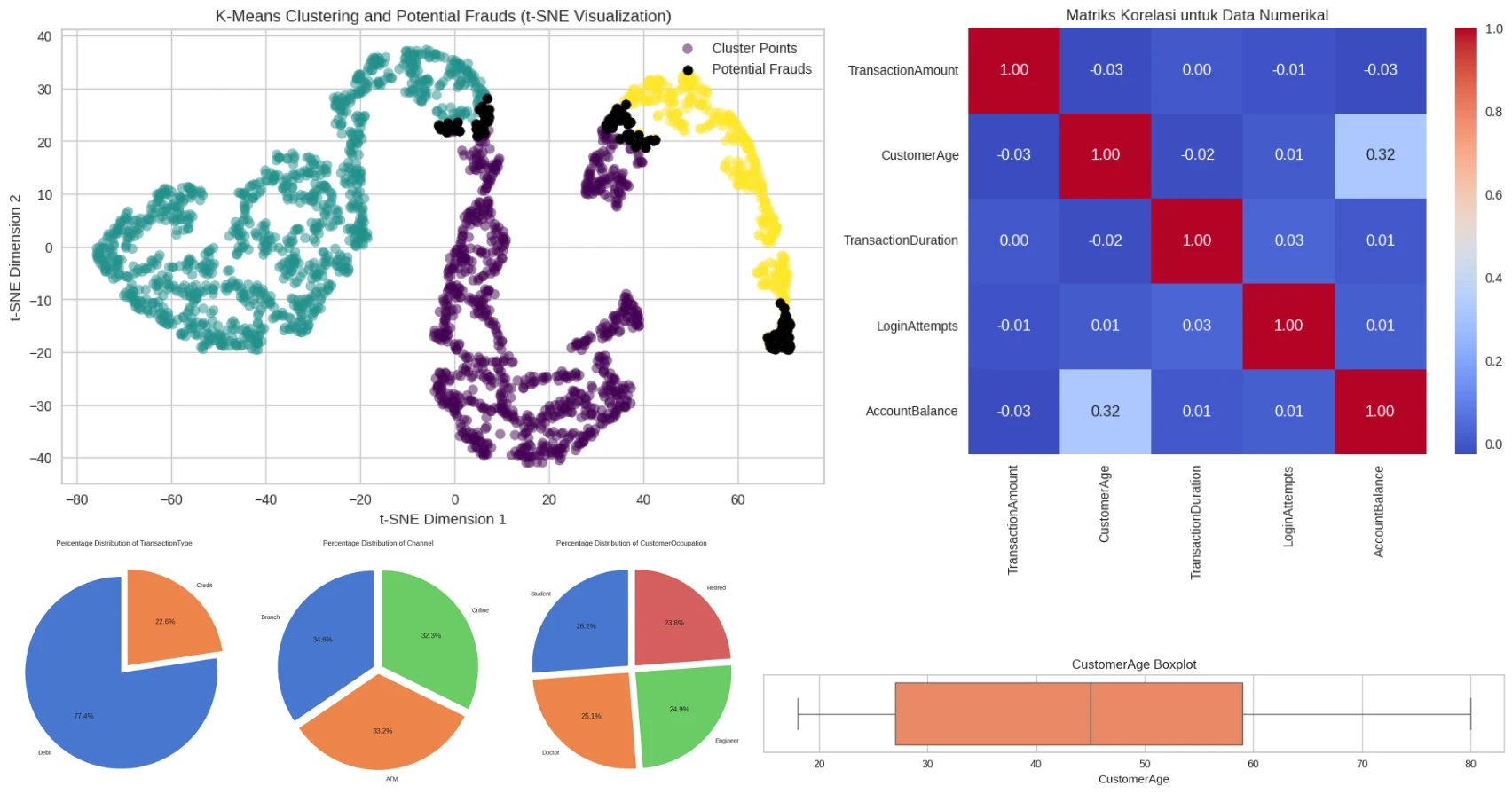
Conducted comprehensive exploratory data analysis, feature visualization, and applied K-Means clustering to group transaction patterns and identify potential anomalies that may indicate fraudulent behavior.
Architecture
Transaction Dataset→
EDA→
Feature Engineering→
K-Means→
Cluster Analysis→
Visualization
Engineering Decisions
- Performed exploratory analysis before modeling to better understand feature distributions and anomalies.
- Applied K-Means clustering as an initial unsupervised approach for behavioral segmentation.
- Focused on visual interpretation to communicate findings effectively.
Challenges
- Understanding high-dimensional financial transaction data.
- Selecting meaningful features for clustering.
- Interpreting unsupervised clustering results without labeled fraud data.
Lessons Learned
- Exploratory Data Analysis is often the most important stage of a data science project.
- Clustering provides behavioral insights rather than definitive fraud predictions.
- Data visualization significantly improves analytical decision-making.
Future Improvements
- Anomaly Detection models.
- Isolation Forest.
- DBSCAN clustering.
- Supervised fraud classification.
- Interactive analytics dashboard.
Technology
PythonPandasNumPyMatplotlibScikit-learn
Gallery