Route Optimization using ILS-RVND
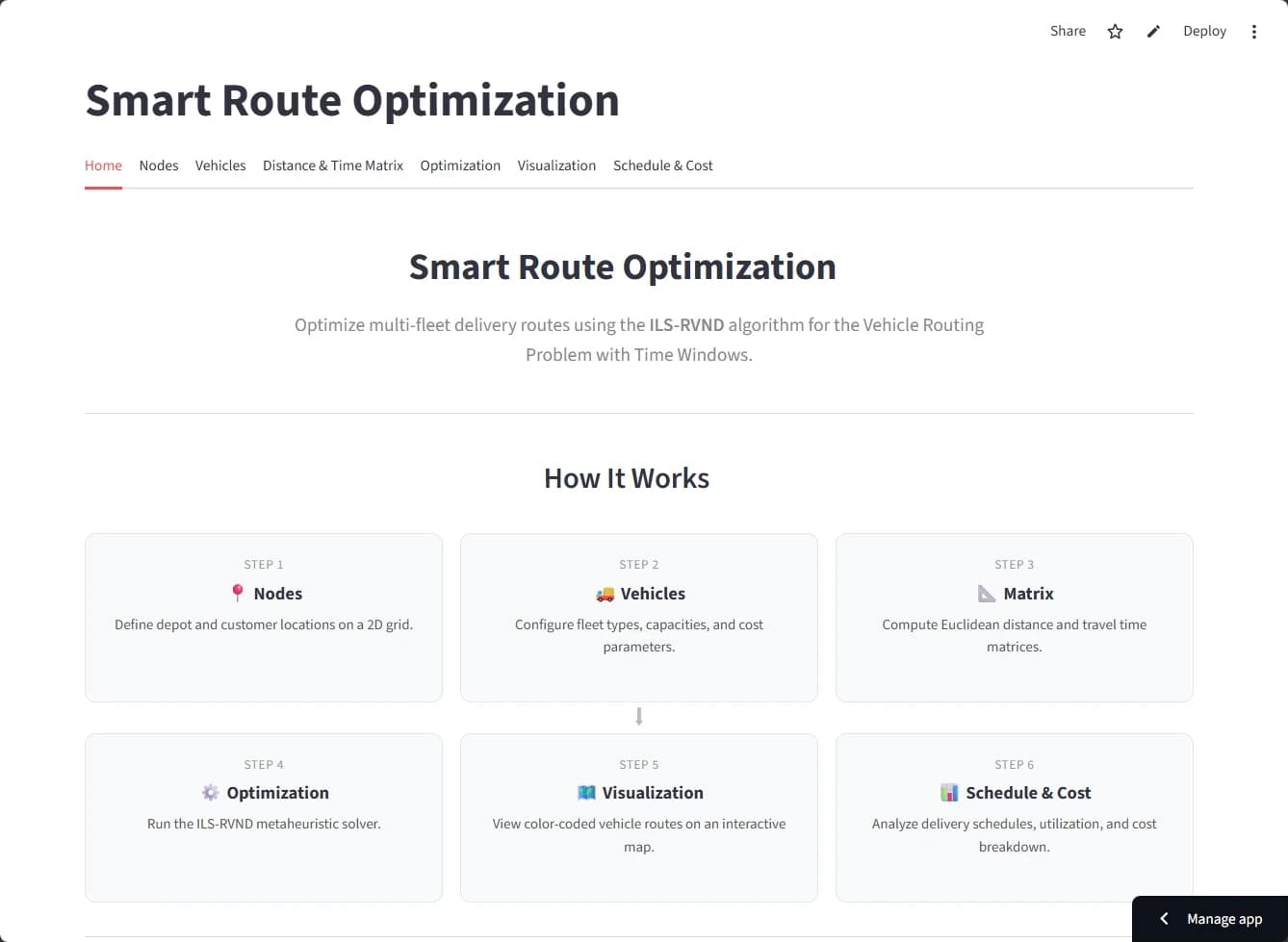
A web-based route optimization system implementing the Iterated Local Search with Random Variable Neighborhood Descent (ILS-RVND) algorithm.
Overview
Developed a complete optimization application that solves routing problems by implementing the ILS-RVND metaheuristic from scratch, allowing users to generate efficient travel routes through an interactive web interface.
Problem
Finding near-optimal routes for multiple destinations becomes computationally expensive as the number of locations increases, making brute-force approaches impractical for real-world applications.
Solution
Implemented the ILS-RVND optimization algorithm entirely from scratch in Python and deployed it as an interactive Streamlit application capable of solving routing problems with customizable datasets.
Architecture
Engineering Decisions
- Implemented the ILS-RVND metaheuristic from scratch instead of relying on optimization libraries to better control algorithm behavior.
- Separated optimization logic from visualization to improve maintainability.
- Designed modular neighborhood operators for easier experimentation and future extensions.
- Used Streamlit to rapidly transform an optimization algorithm into an interactive application.
Challenges
- Implementing multiple neighborhood search operators correctly.
- Balancing solution quality with computational efficiency.
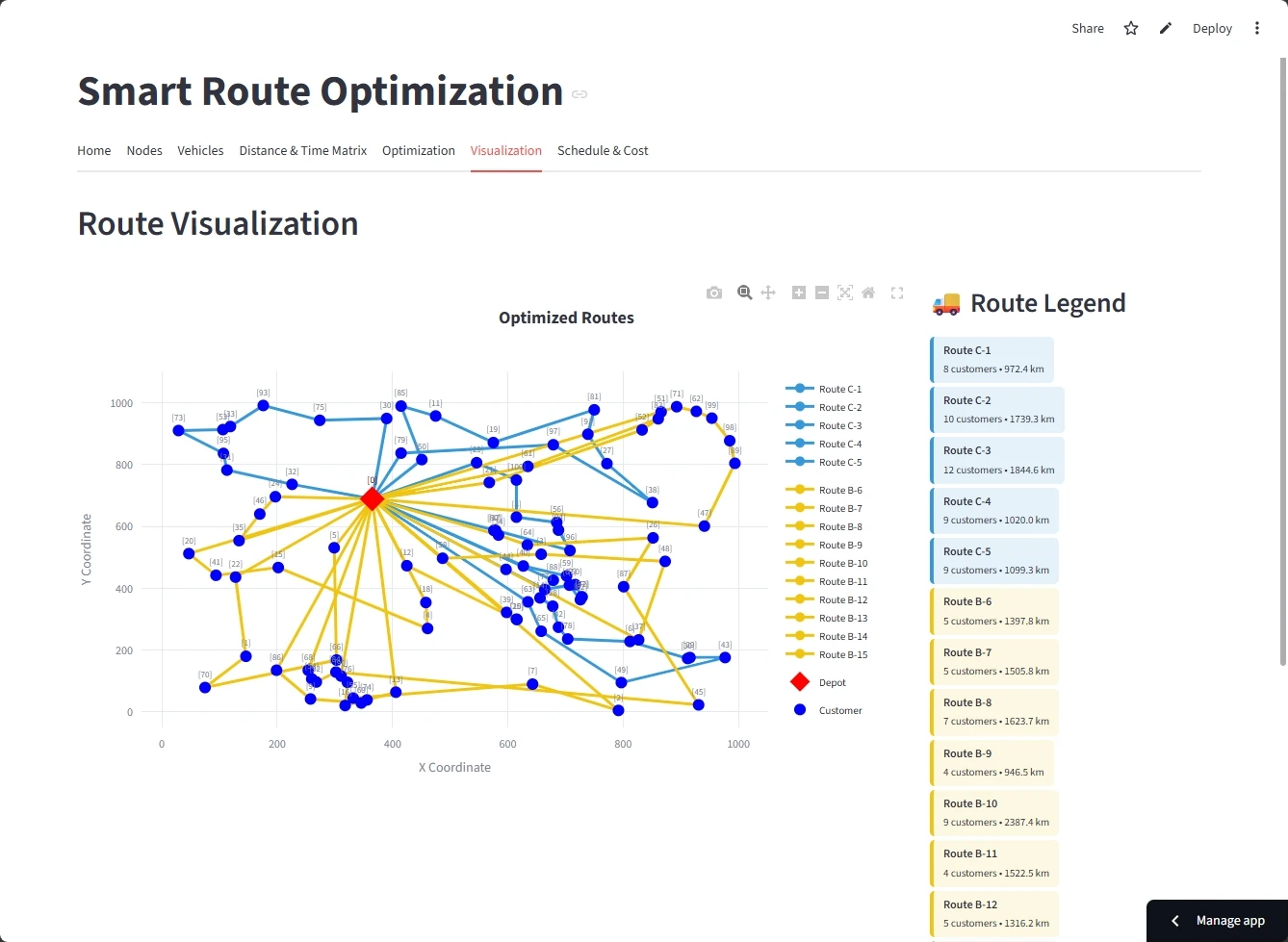
- Visualizing optimization results in an intuitive way for end users.
Lessons Learned
- Well-designed heuristics can produce near-optimal solutions within practical computation times.
- Algorithm implementation quality is as important as algorithm selection.
- Visualization greatly improves users' understanding of optimization results.
Future Improvements
- Vehicle Routing Problem (VRP) support.
- Time Window constraints.
- Google Maps integration.
- Real-world traffic estimation.
- Benchmark against additional metaheuristics.
Technology
Gallery

Results
Performance
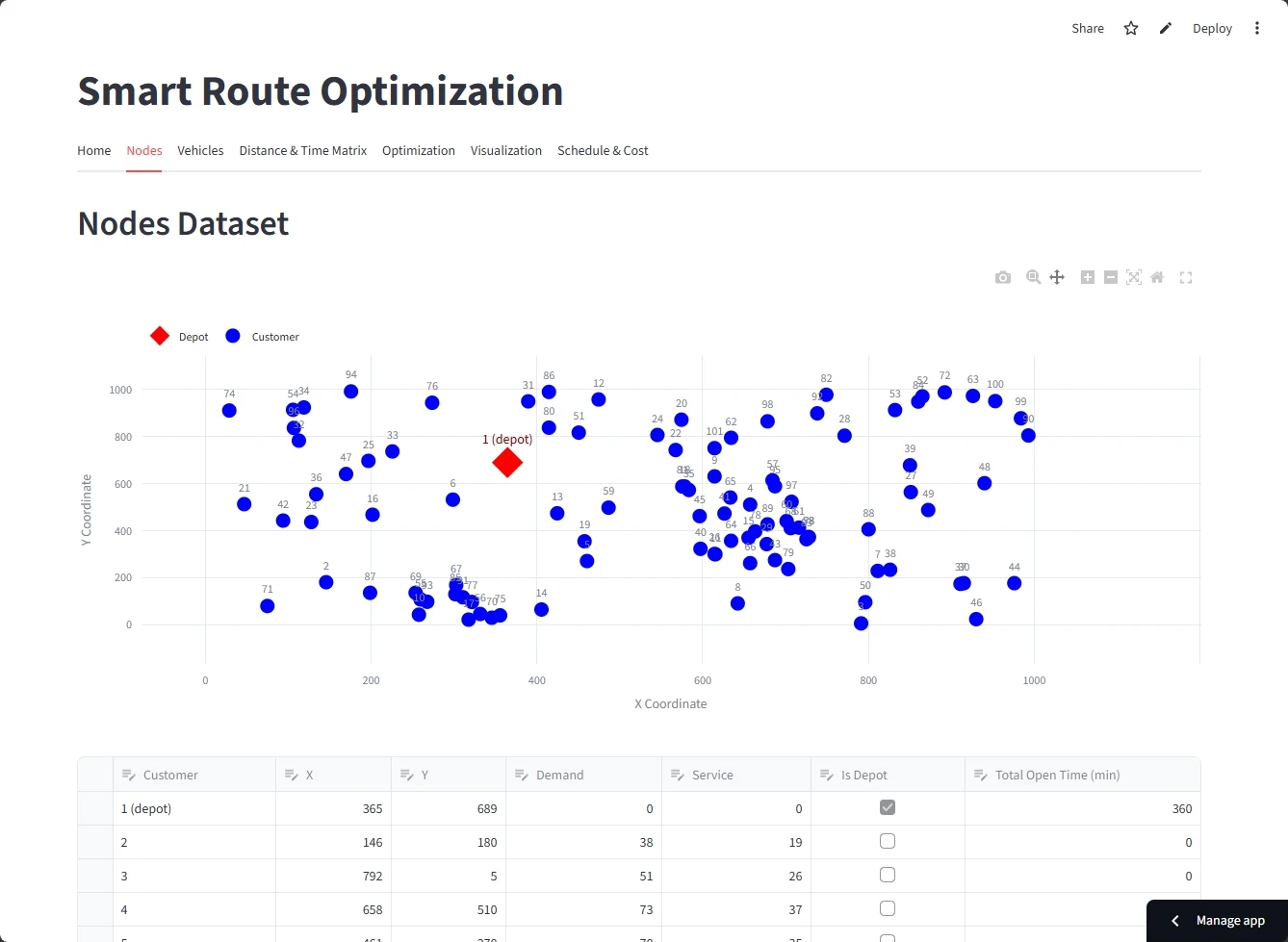
Supports optimization scenarios up to 100 nodes